
Monitoring Country

Traps and Trapping Equipment
Go to the Trapping Kit Supplies buying guide for more information about what to include in your trapping kit.
Traps
Cage Traps

There are a number of different companies that sell cage traps, including through online websites. When buying cage traps, consider quality of the product and make sure that they have:
- treadle plate mechanism
- bait hook or a hook that has been closed to form a loop
- don’t have sharp edges that can hurt an animal
- correct size for target species
Some examples of cage traps that are commonly used in Australia:
- Sheffield Animal Traps: This Australian-based manufacturer makes different-sized cage traps from galvanised materials. The small animal trap (22cm x 22cm x 55cm with 11mm mesh spacing) is suitable for trapping most medium-sized mammals.
- Professional Trapping Supplies: This Australian-based manufacturer that makes different types of traps, including collapsible cage traps in different sizes depending on the target species.
Elliott Traps (Aluminium Box Traps)

Sherman traps, Elliott traps and aluminium box traps are all different names for this style of folding, aluminium trap.
Sherman traps are the original designers and manufacturers, and these traps are still available. Elliott traps were manufactured in Australia, but this company no longer exists. Other aluminium box traps based on Sherman/Elliott designs can purchased in Australia, including through online websites, but can be poorer quality.
Before buying, consider quality of the product and make sure that they have:
- treadle plate mechanism
- don’t have sharp edges that can hurt an animal (sharp edges can be sanded down)
- at least one pin with a long hook for easy removal and opening of the trap
- correct size for target species
Some examples of Elliott traps that available to buy in Australia:
- Professional Trapping Supplies: An Australian-based company that sells the original Sherman traps. The Sherman Type A trap is suitable for monitoring small mammals and reptiles.
- Pilkarra: An Australian-based company that sells Elliott-style traps
Funnel Traps
Pitfall Traps
Handling Bags
Rather than buying bags online, it is better to get a local sewing group or someone in your community to make a large number of bags that are the exact size you need.
Cage trapping bags
- any thick but soft and breathable material - usually cotton drill or polar fleece for colder temperatures
- dark colour
- approximately 75cm long x 55cm wide
- opening that can easily fit over the end of cage tras
- Seams on the outside of the bag
- Long string tie near the opening.
Pouch young bags
- any thick but soft and breathable material - usually polar fleece
- dark colour
- approximately 25cm x 35cm
- opening at the top, mimicking a pouch
- seams on the outside of the bag.
Elliott trapping bags
- calico
- approximately 20cm x 30cm
- opening that can easily fit over the end of the Elliott trap
- drawsting tie around opening
For larger Elliott traps, you can use the same type of bags used for cage trapping.
You can also buy calico bags, such as from:
- Professional Trapping Supplies: This Australian-based manufacturer sells different sized Calico bags.
Hessian Bags
There are a number of different companies that sell hessian sacks, including through online websites and second-hand from coffee roasters. When buying hessian sacks, make sure they are:
- heavy duty
- correct size (approx. 100mm x 60mm)
An example of hessian bags that are commonly purchased in Australia:
- Colquhoun’s: Australian-based supplier of hessians bags in bulk quantities.
Lure/Bait
Lures or baits are best bought in bulk from a food service, stock feed or pet food wholesaler. Avoid using ingredients that a contain additives, preservatives, artificial colours and flavours.
 Avoid peanut butters that use a sugar substitute called xylitol. There have not been any studies on whether xylitol is dangerous for Australian wildlife, but it is known to be toxic to dogs and best to assume it may be dangerous to other animals too.
Cleaning Supplies (Disinfectant)
F10 disinfectant
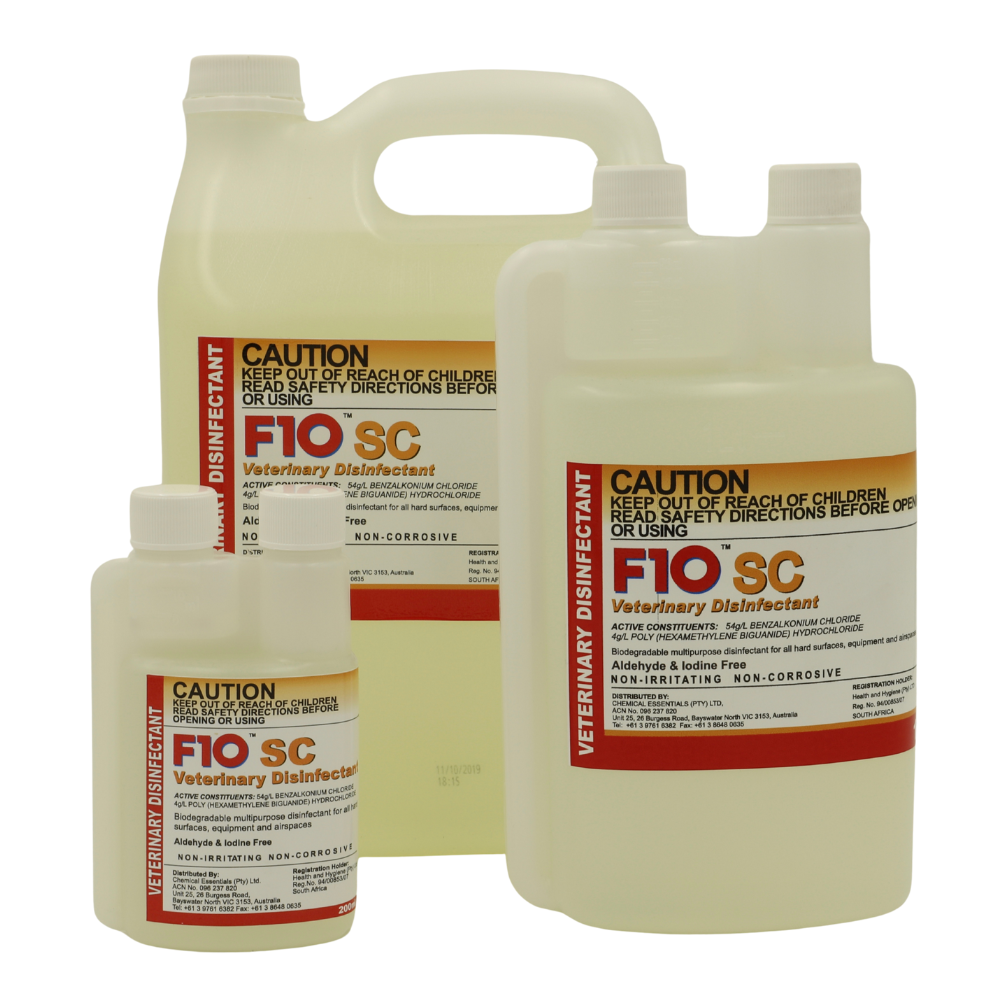
Image: chemicalessentials.com.au
F10 SC Veterinary Disinfectant is commonly used to disinfect trapping equipment. It kills a range of pathogens including bacteria, viruses, fungi and spores. F10 is considered ecologically-friendly and non-toxic, but anyone using F10 should read the safety directions, wear the recommended PPE, dilute to the recommended solution, and store and dispose of properly. F10 can be bought from pet or vet supply shops.
Chlorine bleach
A cheaper but less effective disinfectant is chlorine bleach (sodium hypochlorite). It kills a range of pathogens including bacteria, spores, fungi and some viruses. Chlorine bleach can cause irritation and can be corrosive to metal and fabric, so all equipment must be thoroughly rinsed with fresh water after cleaning. Anyone using chlorine bleach should read the safety directions, wear the recommended PPE, dilute to a 1:10 solution, and store and dispose of properly. Household chlorine bleach can be bought from supermarkets.