
Monitoring Country

Buffel Grasses
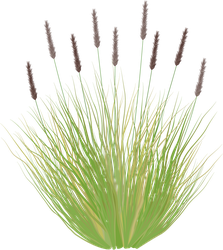
Buffel grasses form thick clumps that are long-lived, deep-rooted and can take over areas so that native vegetation can no longer survive. They can flower and fruit quickly after rainfall and produce large volumes of seed which spread easily. They are well adapted to arid environments and are still seen as a good stock feed by pastoralists in some parts of Australia.
Check out this video called Buffel Free made by the 10 Deserts Project.
Buffel Grasses are a threat to healthy Country and native species
Buffel Grasses are ‘transformer’ weeds because of the way they change Country over large areas. Many consider them to be the worst weed in arid and semi-arid Australia because they are associated with:
- Wrong-way fire
-
- Buffel Grasses can form dense continuous areas of fuel which can lead to an increase in the intensity and frequency of fires. These wrong-way fires can kill important bush foods and important tree species such as corkwoods, red gums, beefwoods, reduce the quality of habitat for native animals, and damage places of cultural significance.
- Outcompeting native plants
- Buffel Grasses can make it hard for native plant seedlings to grow by reducing access to light and space. They can also change the properties of the soil making it harder for native plants to grow. There is often a reduction in the diversity of native plant species present where Buffel Grasses take hold. Native animal species that rely on the presence of these native plant species can then find it more difficult to survive.
This video describes the impacts of Buffel Grass on APY communities.
Buffel Grasses are listed as a declared weed in the Northern Territory and South Australia, and are identified as a key threatening processes to native species under the Environmental Protection and Biodiversity Conservation Act in New South Wales. There is a national Threat Abatement Advice for Buffel Grasses.
Managing Buffel Grasses
The best way to manage Buffel Grasses is to prevent it from establishing in the first place. This can be achieved with good biosecurity through weed prevention and hygiene between sites.
An overview of different weed control methods is available here. There is a lot of great information available about the best method to control Buffel Grasses. Some examples of suitable methods include burning, spraying with poison, burning then spraying with poison or physical removal.
Where Buffel Grasses live
Species Records
Use the + - Zoom controls to select an area
Buffel Grasses are found across Australia and can adapt to many types of soils and amounts of rainfall. They are most common in semi-arid and arid central and western Australia, and in Queensland.
Habitat
Buffel Grasses prefer warm climates with annual rainfall between 250 to 750 mm. They grow well in sandy, loamy, or rocky soils but can adapt to poor soil conditions, including those with low nutrient content and high salinity. They require full sun and can tolerate drought, making them suitable for arid and semi-arid regions.
Common habitats where you find Buffel Grasses include grasslands, rangelands and disturbed areas such as roadsides, pastoral lands and waterways.
What Buffel Grasses look like
Buffel Grasses are a clumping grass between 20 cm to 1 m high, with long, thin leaves. They can look different depending on how dry they are - following summer rain the leaves are green and in dry times the leaves are straw coloured. There are other grasses (both weeds and natives) that can look similar to the Buffel Grasses.

Buffel Grass (Cenchrus ciliaris). Credit: Enot Poluskuns, CC-BY-NC-4.0 (Int).
REMEMBER! Any time you do work that might disturb or interfere with native animals and vegetation, particularly threatened species, you need to check with the state authorities to see if you need any approvals, such as scientific licences or animal ethics committee permits.
You can monitor Buffel Grasses to better understand:
- Where they do and don’t live
- How many live on Country
- How well management of Country is working
By using one or more the following methods, you can better understand Buffel Grasses on your Country. If you monitor the same place at the same time every year, you can see if there are changes to Buffel Grasses on Country.
Weed Monitoring
In development
Vegetation Quadrat Surveys
In development
Any time you do work that might disturb or interfere with native animals and vegetation, particularly threatened species, you need to check with the state authorities to see if you need any approvals, such as scientific licences or animal ethics committee permits.
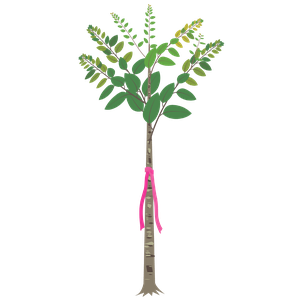
Vegetation plot surveys involve measuring out a small (usually square) area, then counting the different plant species within the plot. The plots can be permanently marked, so you can come back later and repeat the survey. This allows the data to be compared over time. Vegetation plot surveys are cheap …
Primary sources
This landing page was developed using the following sources:
More information
Primary sources
This landing page was developing using the following sources:
- Department of the Environment (2015). Threat Abatement Advice for Ecosystem Degradation, Habitat Loss, and Species Decline in Arid and Semi-arid Australia due to the invasion of Buffel Grass (Cenchrus ciliaris and C. pennisetiformis). Department of the Environment.
- Friedel, M, Puckey, H, O’Malley, C, Waycott, M, Smyth, A and Miller, G (2006). Buffel grass: both friend and foe. An evaluation of the advantages and disadvantages of buffel grass use and recommendations for future research, Desert Knowledge Cooperative Research Centre, Alice Springs.
Tools and resources
- Department of Primary Industries and Regions. Factsheet: Buffel Grass Control. Government of South Australia. 4108_PIRSA_factsheet_Buffel_Grass_Control.pdf
- Department of Primary Industries and Regions. Facsheet: Buffel Grass Identification. Government of South Australia. PIRSA_factsheet_Buffel_Grass_Identification_FA2_CJ.pdf