Monitoring Country

Bilby
 Vulnerable
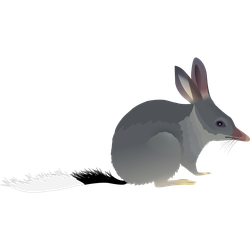
The Greater Bilby is a nocturnal, native marsupial, found in sandy arid or desert Country. It has soft grey fur and long rabbit-like ears. There used to be another species called the Lesser Bilby (Macrotis leucura) but it went extinct in the 1960s.
| Aboriginal Name | Language Group |
|---|---|
| Bilba | Ullaroi/Yuwaalaraay |
| Ninu | Pintupi/Pitjantjatjara |
| Dalgyte | Noongar |
| Mankarr | Martu |
Species Records
Use the + - Zoom controls to select an area
Where they are
Bilbies are a medium-size marsupial with:
- soft grey and white fur
- long hind (back) feet
- a black tail with a fluffy white tip and
- long rabbit-like ears
They can sometimes be confused with rabbits, but bilbies have different coloured fur, longer ears pointed at the tips, a much longer tail, and a delicate, pointed snout.
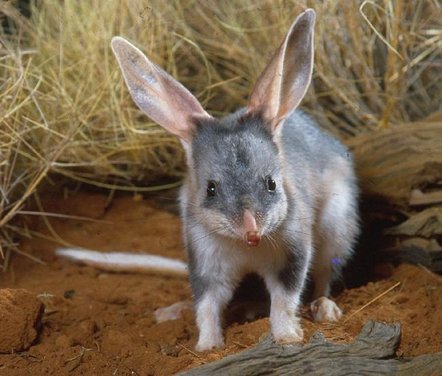
Greater bilby. Credit: Queensland Government
Diggings and Scats
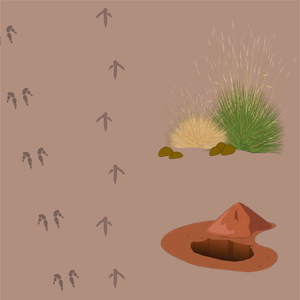
Biblies usually dig for their food, leaving behind holes about 10-25 cm deep. You can often find their scat in the dirt piles next to the holes.

Bilby scats. Credit: Robert Brown-Cooper.
Burrows
Bilby burrows are spiral shaped and can be up to 3 metres long and 2 metres deep. The burrows typically have a large circular opening with a pile of sand next to it.
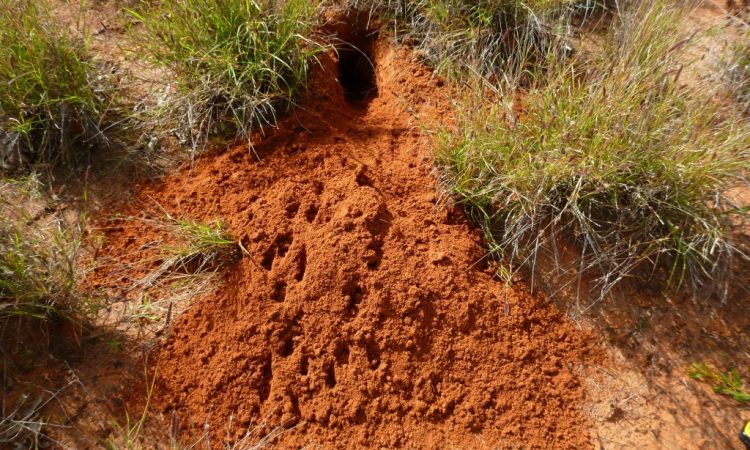
Bilby Burrow. Credit: Martin Dziminski, WA Department of Biodiversity, Conservation and Attractions via NESP
Tracks

Bilby tracks. Credit: Michael Hains.
Conservation Status
- NSW - Exctinct
 , NT - Vulnerable
  , Qld - Endangered, SA - Vulnerable, WA – Vulnerable
There is a two-way science recovery plan for the greater bilby. The recovery plan brings together Traditional Ecological Knowledge and scientific research to help people know what management and research is needed to best look after the Greater Bilby.
Bilbies have been successfully reintroduced to areas where they used to be found, including islands, feral-predator proof fenced areas and lands that are intensively managed for things like feral cats and fire.
Threats
Some of the key threats to bilbies include:
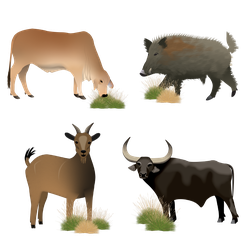
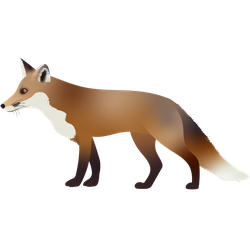
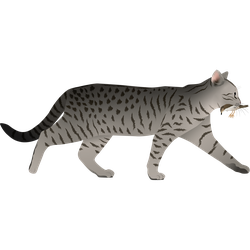
- Predation by feral cats, foxes, and wild dogs
- Unhealthy Country caused by:
- Wrong-way fire (bad fire regimes - more often, hotter, bigger)
- Loss and degradation of habitat from mining and land clearing
- Loss and degradation of habitat from introduced and feral herbivores like rabbits, cattle and camels
You can monitor bilbies to better understand:
- Where bilbies do and don’t live
- How many bilbies live on Country
- How well management of Country and bilbies is working
By using one or more the following methods, you can better understand bilbies on your Country. If you monitor the same place at the same time every year, you can see if there are changes to bilbies on Country.
Any time you do work that might disturb or interfere with native animals and vegetation, particularly threatened species, you need to check with the state authorities to see if you need any approvals, such as scientific licences or animal ethics committee permits.

- Where bilbies live:
- Occupany - the proportion of sites occupied by a species
- Changes over time - are species being detected at the same sites every year, or are they disappearing from some and/or appearing at other sites?
- Habitat preferences - does the species only occur in particular habitats?
- Detection frequency - how often are they being detected in an area?
- Behaviour - what are they doing in the photos?
- Activity - you can know when they are active or passing through areas. This can also be used as an indicator of how large the population might be
- You can collect data from seeing bilbies in an image. You might be able to identify their age, sex, group size, health (skinny or fat) etc
You can learn more about Camera Traps in the Environmental Monitoring Method Landscape Scale Camera Traps.
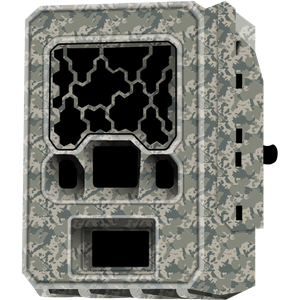
Camera traps can be used to monitor bilbies on Country. They can be set to automatically take photos or videos when an animal passes the camera. You can make your monitoring more efficient and cost effective by monitoring multiple species (including native and introduced species) with this method.
You will need to buy good quality remote cameras, but not much training is needed for deploying cameras or identifying species in the images. Images can also be processed first with the use of artificial intelligence (AI) tools, which can be useful when you have large numbers of images.
Cameras are one of the best ways to monitor bilbies if you know, or are fairly confident that, they are on your Country. Bilbies are easily identifiable from camera images, and you can aim the cameras at their burrow entrances. You can put out lots of cameras and cover large areas, increasing the chance that you will detect them.
When planning to do a camera survey:
- Use cameras in areas suitable for camera trapping i.e. open enough to take photos, or along trails, good access
- Avoid putting cameras in areas prone to flooding or becoming seasonally inaccessible, or make sure you collect cameras before it becomes inaccessible
- Bilbies are generally nocturnal
- If there is an obvious path or area that bilbies use, you can set up cameras to face this path. Angle the camera down the path, so that you increase the amount of time the camera has to take pictures as bilbies pass by
- Bilbies have a medium-sized body, so should easily trigger the camera sensors. You can use the standard camera trapping set up (height of 30 - 40 cm from ground) to monitor them
- Place cameras at least 500 m apart
- Whenever possible, proof image classifications (including images with “nothing” in them), especially when using AI
- Bilbies have been detected on cameras lured with universal bait (peanut butter and oats, with or without sardines), apple and sweet potato
- Presence/absence – if and where bilbies live on Country
- Occupancy - if enough plots are surveyed, the presence/absence data can be used to estimate occupancy. This type of modelling helps to work how many areas really have bilbies, even if they weren’t detected at every plot. This can be used as an indicator of how large the population might be and if is getting smaller/bigger over time
- Activity - how many signs of bilbies were detected during the survey. This can be used as an indicator of how large the population might be
- Population size – if enough fresh scat can be collected and sent off for genetic analysis, the information can be used in a capture-recapture analysis to estimate how many bilbies live on Country
You can learn more about 2 Ha Plot Surveys in the Environmental Monitoring Method 2 Ha Plot Surveys: Tracks, Scats, Diggings, and Signs.
2 Ha Plot Surveys can be used to monitor bilbies on Country. This is a method where trackers search a 2 Hectare (Ha) area for all signs of animals, including tracks, scats, diggings and other signs. If signs of a species are found in a plot, its presence is recorded. This method doesn’t usually focus on a single species as you can often record signs of many species. This survey doesn’t need specialised equipment, but it is useful to have some tracking skills, particularly when trying to identify challenging signs like diggings.
2 Ha Plot Surveys can be a good method for monitoring bilbies, if you are on sandy Country, and if you can identify their tracks and scats. Identifying bilby tracks and scats is not as easy as identifying bilbies from camera images, but 2 Ha Plot Surveys don't need expensive equipment, and can be faster and easier to do.
Primary sources
This landing page was developing using the following sources:
- Department of Climate Change, Energy, the Environment and Water (2023). Recovery Plan for the Greater Bilby (Macrotis lagotis), Commonwealth of Australia: Canberra, ACT. https://www.dcceew.gov.au/environment/biodiversity/threatened/publications/recovery/greater-Bilby-2023
- Threatened Species Scientific Committee (2016). Conservation Advice: Macrotis lagotis Greater Bilby. Commonwealth of Australia: Canberra, ACT. http://www.environment.gov.au/biodiversity/threatened/species/pubs/282-conservation-advice-15072016.pdf
- Hogg, C.J., et al. (2024). Extant and extinct bilby genomes combined with Indigenous knowledge improve conservation of a unique Australian marsupial. Nature Ecology & Evolution 8(2024); 1311-1326. https://doi.org/10.1038/s41559-024-02436-2
- Australian Museum (2024). Greater Bilby https://australian.museum/learn/animals/mammals/greater-Bilby/
Tools and resources
- A guide to monitoring Bilbies: https://www.nespthreatenedspecies.edu.au/media/iejjy2j3/kj-guide-to-mankarr-monitoring-report_web-2.pdf
Webpage version: GA-JH-JH-GA-140426