Monitoring Country

Malleefowl
- Other common names: native pheasant, mallee hen
- Scientific name: Leipoa ocellata
 Endangered
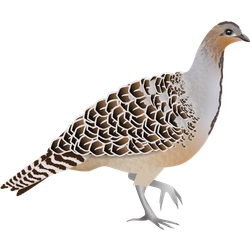
Malleefowl are large, ground-dwelling birds that rarely fly, though they can when alarmed. They build large mounds in which they lay their eggs. Their feather colours and patterns make them very well camouflaged in the bush.
Conservation status
- National – Vulnerable
- NSW – Endangered
- NT – Critically Endangered
- SA – Vulnerable
- VIC – Vulnerable
- WA – Vulnerable
There is a national recovery plan for Malleefowl. The recovery plan helps people know what management and research is needed to best look after Malleefowl.
Where Malleefowl live
Occurrence Records
Use the + - Zoom controls to select an area
Where they live
Malleefowl are mostly found across southern Australia, from the Great Dividing Range in the east through to the west coast. They are no longer common in many areas where they were once found, like in New South Wales and the Northern Territory. The species has likely declined by 30-50% over 30 years.
Habitat
Malleefowl are found in semi-arid and arid areas - usually shrublands, low woodlands, and mallee eucalypts or acacias – with sandy soils and abundant leaf litter which are required for nesting.
What Malleefowl look like
Malleefowl are shades of grey above and white below, with distinct black and brown banding pattern marks on their wings and back. They have a white stripe under the eye and small crest on their head.

Nests
Malleefowl build large nest mounds, up to 5 metres wide and 1 metre tall, out of soil, sand, and leaf litter. Malleefowl pairs often use the same nest for multiple years. Eggs are laid deep in the mound to incubate. Typically the male defends the nest.

Malleefowl nest mound. Credit: David Sando, CC-BY-NC-4.0 (Int).
Main Threats
Some of the key threats to Malleefowl include:
Unhealthy Country or lost habitat caused by:
- Wrong-way fire
- Land clearing
- Vehicle strikes on roads
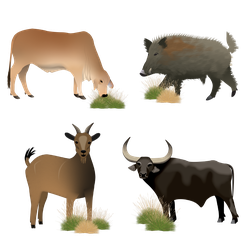
- Competition with and damage by feral herbivores
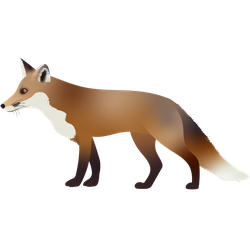
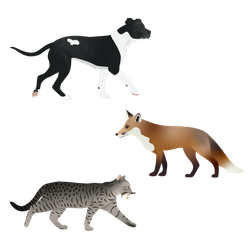
- Predation by introduced predators
- Weeds (particularly buffel grass)
- Climate change

Better understand:
REMEMBER! Any time you do work that might disturb or interfere with native animals and vegetation, particularly threatened species (like Malleefowl), you need to check with the state authorities to see if you need any approvals, such as scientific licences or animal ethics committee permits.
You can monitor Malleefowl to better understand:
- Where they do and don’t live
- How many live on Country
- How well management of Country and the threats to Malleefowl is working
By using one or more the following methods, you can better understand Malleefowl on your Country. If you monitor the same place at the same time every year, you can see if there are changes to Malleefowl on Country.
Malleefowl Mound Monitoring
A good way to monitor Malleefowl is by searching for active mounds – that is, mounds that are currently being used for nesting. This survey doesn’t need specialised equipment, but you will either need to know where old mounds are (to see if they’re being used again) or have some idea of where to find new mounds (like the right habitat type).
What can you learn?
- Presence/absence – if and where Malleefowl live on Country
- Occupancy - If enough active nest mounds are found, the presence/absence data can be used to estimate occupancy. This type of modelling helps to work how many places really have Malleefowl, even if they weren’t seen at every nest.
Using it the Right-way
You can learn more about the Malleefowl Mound Monitoring on the “How we check on things” page and in the Environmental Monitoring Method Malleefowl Mound Monitoring (in development).
Any time you do work that might disturb or interfere with native animals and vegetation, particularly threatened species, you need to check with the state authorities to see if you need any approvals, such as scientific licences or animal ethics committee permits.
VIEW PERMIT INFOPrimary sources
This landing page was developing using the following sources:
Primary sources
This landing page was developing using the following sources:
- BirdLife International (2022). Species factsheet: Malleefowl Leipoa ocellata. Downloaded from https://datazone.birdlife.org/species/factsheet/malleefowl-leipoa-ocellata 18/02/2026.
- DCCEEW (2024). National Recovery Plan for the Malleefowl (Leipoa ocellata), Department of Climate Change, Energy, the Environment and Water, Canberra. CC BY 4.0.
- Department of Parks and Wildlife. (2016). Fauna profiles: Malleefowl Leipoa ocellata. Retrieved from: http://www.dpaw.wa.gov.au/
Tools and resources
Tools and resources
No additional tools or resources found.