
Monitoring Country

Koala
 Endangered
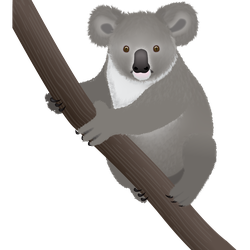
The Koala is an easily recognisable native marsupial that spends its time eating gum leaves. It is semi-arboreal, meaning it spends most of its life in the trees but rather than using the tree canopy to move, they walk along the ground to travel between trees.
Conservation status
- National – Endangered (for the combined populations of Queensland, New South Wales and the Australian Capital Territory)
- ACT – Endangered, NSW – Endangered, QLD – Endangered
Only the populations of Koala in Queensland, New South Wales and the Australian Capital Territory are listed as threatened. This is because populations of Koala in Victoria and South Australia are either stable or over-abundant.
There is a national recovery plan for the Koala. The recovery brings together Traditional Ecological Knowledge, community engagement and scientific research to help people know what management and research is needed to best look after the Koala, including populations in Victoria and South Australia.
Where Koala live
Species Records
Use the + - Zoom controls to select an area
Koalas are found across the coastal and inland areas of eastern Australia but they have declined since European colonisation. They are now found in separated forests in Queensland, New South Wales and the Australian Capital Territory, but are widespread across Victoria and south-east South Australia.
They have been successfully introduced to areas of South Australia including Kangaroo Island, Adelaide Hills, Eyre Peninsula and along the Murray River, Victoria including Phillip Island, and Queensland including Magnetic Island.
Habitat
Koalas are found in forests and woodlands dominated by Eucalyptus trees, including natural woodlands, plantations and farmland. Koalas move every day between different food and shelter trees. Koalas need larger, shady trees for shelter during hot days and to escape predators.
What Koalas look like
Koalas have light grey-brown woolly fur, large, round fluffy ears and barely any tail. They have long sharp claws that help them climb trees. They have a backward facing pouch. Males can be up to 50% larger than the females.
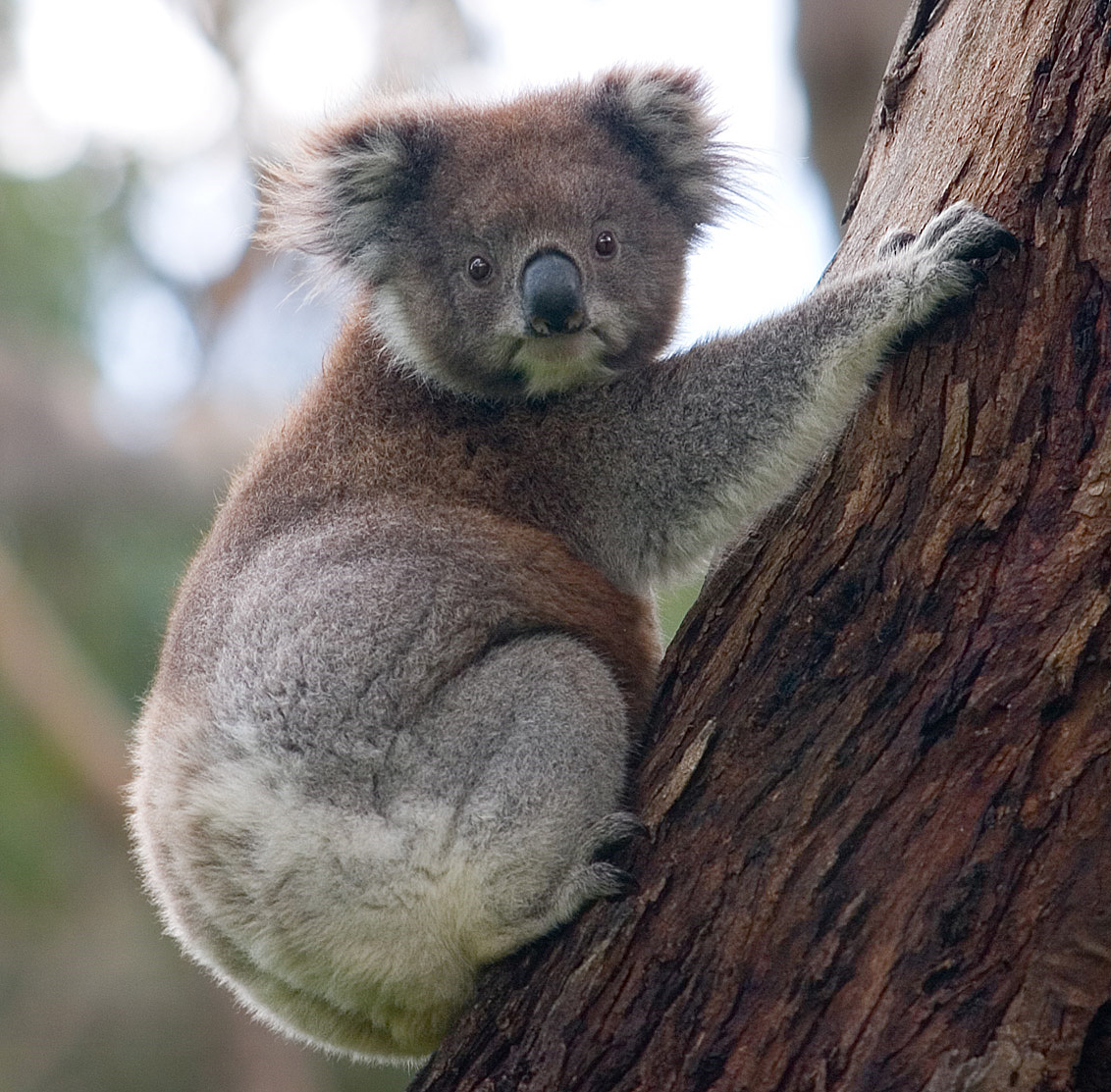
Koala (Phascolarctos cinereus). Credit: David Iliff, CC-BY-SA-3.0.
What Koalas sound like
During the breeding season, males will make loud snarling coughs, bellows and pig-like grunts and females will make high-pitched calls.
What Koalas eat
Koalas mostly eat the leaves of Eucalyptus (Gum Trees), Corymbia (Bloodwood Trees) and Lophostemon (Box Tree) species.
Threats
Some of the key threats to the Koala include:
- Unhealthy Country or lost habitat caused by:
- land-clearing for farms, mines, houses and logging
- Climate change and extreme weather events like drought, heatwaves and bushfires
- Vehicle strikes
- Dog attacks
- Disease (Koala retrovirus and Chlamydia)
REMEMBER! Any time you do work that might disturb or interfere with native animals and vegetation, particularly threatened species, you need to check with the state authorities to see if you need any approvals, such as scientific licences or animal ethics committee permits.
You can monitor Koalas to:
- Better understand where Koalas do and don’t live
- See how many Koalas live on Country
- Check how well management of Country and Koalas is working
By using one or more the following methods, you can better understand Koalas on your Country. These methods are recommended by the National Koala Monitoring Program, which also has protocols for more specialised methods like using drones and detector dogs. Refer to their website for more details: https://www.nkmp.org.au/
Audio Recording Units
A good way to check for Koalas on Country is by using Audio Recording Units (ARU). These are a recording device that can be set to record the sound of Country over time and save them to a memory card.
What can you learn?
Using ARU Surveys, you can learn if and where Koalas live on Country. You can also use this method to estimate how many Koalas live on Country, but it involves some advanced statistical analysis. If you monitor the same places over many years, you can see if there are changes in where or how many Koalas are on Country.
Using it the Right-way
ARUs can be deployed in Koala habitat during breeding season (generally August-December) and be set to record when the Koalas will be calling (sunrise to sunset).
You can learn more about using ARUs to survey Koalas on the “How we check on things” page and in the Environmental Monitoring Method Biodiversity Monitoring with Audio Recording Units.
Line Transect Searches
Another good way to estimate how many Koalas live on Country is by visually searching for Koalas. This involves looking for Koalas either during the day or at night along either along four 500m transects or one 2 km transect. The transects can be searched once or multiple times. This survey uses headtorches, laser range finders, and the KNMP Koala Counter App to collect some specific data on each Koala sighting.
What can you learn?
Line transect searches can tell you exactly where Koala are living (occupancy) on Country or give you an idea of how many are there (activity and/or population size). The KNMP Koala Counter App can be used to estimate population size.
Using it the Right-way
This survey can be done in collaboration with the National Koala Monitoring Program. Refer to their website for more details: https://www.nkmp.org.au/
You can learn more about using line transects to survey Koalas on the “How we check on things” page and in the Environmental Monitoring Method Koala Monitoring with Line Transect Searches.
Scat Search
Another good way to check for Koalas on Country is by using a scat survey. This involves looking for Koala scat. This method is useful if you already know Koalas live on Country.
What can you learn?
Scat searches can tell you exactly where Koala are living (occupancy) on Country or give you an idea of how many are there (activity and/or population size).
You can also collect the scat for DNA analysis. This information can be used to estimate population size and investigate population health.
Using it the Right-way
This survey can be done in collaboration with the National Koala Monitoring Program. Refer to their website for more details: https://www.nkmp.org.au/
You can learn more about using scat searches to survey Koalas on the “How we check on things” page and in the Environmental Monitoring Method Koala Scat Searches.
Any time you do work that might disturb or interfere with native animals and vegetation, particularly threatened species, you need to check with the state authorities to see if you need any approvals, such as scientific licences or animal ethics committee permits.

- Less stress for animals: Animals often change their behaviour when people are around.
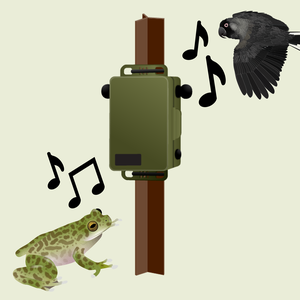
- Hear what we miss: ARUs can record all day and night, recording sounds made by animals that don’t call much or those that call when we're not around.
- Do the time for you: ARUs …
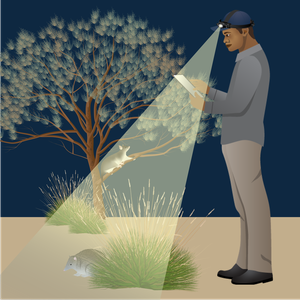

Less stress for animals: Spotlight surveys don’t involve catching and handling mammals. Animals are often stressed if they are caught and handled by people.
Quick and flexible: Spotlighting surveys don’t require much effort and can be done without much equipment or complicated planning.
What can mammal spotlighting surveys …
Primary sources
This landing page was developing using the following sources:
Primary sources
This landing page was developing using the following sources:
- Threatened Species Scientific Committee (2005). Conservation Advice for Phascolarctos cinereus (Koala) combines populations of Queensland, New South Wales and the Australian Capital Territory. Commonwealth of Australia. https://www.environment.gov.au/biodiversity/threatened/species/pubs/85104-conservation-advice-12022022.pdf
- Department of Agriculture, Water and the Environment (2022). National Recovery Plan for the Koala Phascolarctos cinereus (combined populations of Queensland, New South Wales and the Australian Capital Territory). Department of Agriculture, Water and the Environment, Canberra. Available from: http://www.dcceew.gov.au/environment/biodiversity/threatened/publications/recovery/koala-2022.
- NSW Department of Environment and Heritage (2024). Koala. https://www2.environment.nsw.gov.au/topics/animals-and-plants/native-animals/native-animal-facts/koala
Tools and resources
- National Koala Monitoring Program - https://www.nkmp.org.au/